1. Musical Chairs

Musical Chairs is a timeless game that combines music, movement, and quick reflexes, making it a favourite at children’s parties. It encourages friendly competition and keeps the energy levels high.
How to Play:
- Setup: Arrange chairs in a circle, with the seats facing outward. Ensure there’s one less chair than the number of players.
- Starting the Game: Play upbeat music and have the children walk or dance around the circle of chairs.
- Stopping the Music: At random intervals, pause the music. When the music stops, each child must quickly find a chair to sit on.
- Elimination: The child left standing without a chair is out of the game. Remove one chair and resume the music.
- Continuing Play: Repeat the process until only one child remains seated. This child is declared the winner.
2. Pin The Tail On The Donkey
Pin The Tail On The Donkey is a classic party game that tests children’s spatial awareness and provides heaps of fun. It’s simple to set up and can be adapted to various party themes.
How to Play:
- Preparation: Draw or print a large image of a donkey without a tail and place it on a wall at the children’s eye level. Create a separate tail with double-sided tape or a pin.
- Blindfolding: One at a time, blindfold each child and gently spin them around a couple of times to disorient them slightly.
- Pinning the Tail: Guide the blindfolded child towards the donkey poster and encourage them to pin the tail where they believe it should go.
- Revealing: After pinning, remove the blindfold to reveal the child’s attempt.
- Winner: The child who places the tail closest to the correct spot wins.
3. Pass The Parcel
Pass The Parcel is a delightful game that builds anticipation and excitement among children. It involves unwrapping layers of a parcel, with surprises hidden within.
How to Play:
- Preparation: Before the party, wrap a small gift in multiple layers of wrapping paper. For added fun, place a small treat or trinket between some of the layers.
- Seating: Have the children sit in a circle.
- Passing the Parcel: Play music as the children pass the parcel around the circle.
- Unwrapping: When the music stops, the child holding the parcel unwraps one layer. If there’s a treat between the layers, they keep it.
- Continuing Play: Resume the music and continue the process until the final layer is unwrapped, revealing the main prize.
4. Egg And Spoon Race
The Egg And Spoon Race is a lively outdoor game that tests balance and concentration. It’s a fantastic way to get children moving and laughing.
How to Play:
- Materials: Provide each child with a spoon and an egg. For less mess, consider using hard-boiled eggs or plastic ones.
- Starting Line: Have the children line up at the starting point, each holding their egg on their spoon.
- The Race: On the signal, children race towards the finish line, balancing the egg on their spoon.
- Rules: If a child drops their egg, they must stop and reposition it before continuing.
- Winner: The first child to cross the finish line with their egg intact is the winner.
5. Sack Race

The Sack Race is a high-energy game that brings out children’s competitive spirit. It’s perfect for outdoor settings and guarantees lots of laughter.
How to Play:
- Materials: Obtain a large sack or pillowcase for each child. Ensure the sacks are sturdy and safe for hopping.
- Starting Line: Line the children up at the starting point, each standing inside their sack, holding the edges at their waist.
- The Race: At the signal, children hop forward in their sacks towards the finish line.
- Rules: If a child falls, they must get back up and continue hopping.
- Winner: The first child to reach the finish line is declared the winner.
6. Three-Legged Race
The Three-Legged Race is a classic game that encourages teamwork and coordination. By pairing children together, it fosters communication and unity, making the celebration more interactive and fun.
How to Play:
- Pairing Up: Divide the children into pairs of similar height and build to ensure fairness.
- Tying Legs Together: Use a soft cloth or band to tie the right leg of one child to the left leg of their partner, creating the “three-legged” effect. Ensure the knot is secure but comfortable.
- Defining the Racecourse: Mark a clear starting line and a finish line, adjusting the distance based on the children’s age and space available.
- Starting the Race: At the signal, pairs must work together to move towards the finish line, coordinating their steps to avoid falling.
- Determining the Winner: The first pair to cross the finish line successfully is declared the winner.
7. Treasure Hunt

A Treasure Hunt adds a sense of adventure to any birthday party. It stimulates problem-solving skills and teamwork, making the celebration both interactive and intellectually engaging.
How to Play:
- Planning the Hunt: Before the party, hide small treasures or treats around the venue. Create a series of clues or a map leading to each hidden item.
- Dividing into Teams: Split the children into small groups, encouraging them to come up with team names to build camaraderie.
- Starting the Hunt: Provide each team with the first clue or the treasure map.
- Following the Clues: Teams must decipher each clue to find the next location, working together to solve any riddles or puzzles.
- Finding the Treasure: The hunt continues until all treasures are found or a final grand prize is discovered.
8. Simon Says
Simon Says is a classic game that tests children’s listening skills and ability to follow instructions. It’s simple to play and can lead to lots of laughter, enhancing the party’s interactive atmosphere.
How to Play:
- Selecting ‘Simon’: Choose one child or an adult to be ‘Simon’, the leader who gives commands.
- Giving Commands: ‘Simon’ issues instructions starting with “Simon says,” such as “Simon says touch your toes.” Players must follow these commands.
- Trick Commands: If ‘Simon’ gives a command without saying “Simon says” (e.g., “Jump up”), players should not follow it.
- Elimination: Players who follow a command without “Simon says” are out of the game.
- Winning the Game: The last player remaining becomes the new ‘Simon’ or is declared the winner.
9. Duck, Duck, Goose
Duck, Duck, Goose is a lively game that gets children moving and laughing. It promotes social interaction and quick reflexes, adding energy to the celebration.
How to Play:
- Forming a Circle: Have all the children sit in a circle facing inward.
- Choosing the ‘Picker’: Select one child to be the ‘picker’ who will walk around the outside of the circle.
- Tapping and Naming: The ‘picker’ walks around, gently tapping each seated child on the head, saying “duck” with each tap.
- Selecting the ‘Goose’: At their discretion, the ‘picker’ taps a child and says “goose,” then starts running around the circle.
- Chasing: The ‘goose’ stands up and chases the ‘picker’ around the circle, trying to tag them before they reach the empty spot and sit down.
- Continuing the Game: If the ‘picker’ reaches the empty spot without being tagged, the ‘goose’ becomes the new ‘picker’. If tagged, the ‘picker’ continues for another round.
10. Hot Potato

Hot Potato is an exciting game that keeps children on their toes. It involves quick thinking and agility, making the celebration more dynamic and fun.
How to Play:
- Gathering Players: Have the children sit or stand in a circle.
- Choosing the ‘Potato’: Use a soft object like a beanbag or small ball to serve as the ‘hot potato’.
- Starting the Music: Play lively music as the children pass the ‘hot potato’ around the circle as quickly as possible.
- Stopping the Music: At random intervals, pause the music. The child holding the ‘hot potato’ when the music stops is out of the game.
- Continuing Play: Resume the music and continue until only one child remains, who is then declared the winner.
11. Red Light, Green Light
Red Light, Green Light is a classic children’s game that combines fun with physical activity, making it an excellent choice for birthday parties. It encourages listening skills, quick reflexes, and provides plenty of laughter.
How to Play:
- Setup: Designate a starting line and a finish line, with a distance suitable for the children’s age group.
- Choose a Leader: Select one child to be the “traffic light,” who stands at the finish line facing away from the other players.
- Game Play: The “traffic light” calls out “Green Light!” prompting players to move towards the finish line. When “Red Light!” is called, players must freeze immediately.
- Elimination: Any player caught moving after “Red Light!” is called must return to the starting line.
- Winning: The first player to reach and tag the “traffic light” becomes the new leader for the next round.
12. Freeze Dance
Freeze Dance is a lively game that combines music and movement, perfect for energising a birthday party. It encourages children to express themselves through dance while honing their listening skills.
How to Play:
- Preparation: Create a playlist of upbeat, child-friendly songs.
- Starting the Music: Gather the children in an open space and start playing the music.
- Dancing: Encourage the children to dance freely and expressively.
- Freezing: At random intervals, pause the music. Children must freeze in their current positions and hold still until the music resumes.
- Elimination (Optional): Children who move during the freeze can be eliminated, or the game can continue without eliminations for continuous fun.
13. Balloon Pop Relay

Balloon Pop Relay is an exciting game that combines teamwork and bursts of laughter, making it a hit at any birthday party. It involves racing to pop balloons in a relay format, adding a competitive edge to the fun.
How to Play:
- Preparation: Inflate several balloons and place them at a designated point away from the starting line.
- Team Formation: Divide the children into two or more teams, ensuring each team has an equal number of players.
- Starting the Relay: On “Go!”, the first player from each team runs to the balloon pile, selects a balloon, and pops it by sitting or stomping on it.
- Returning: After popping the balloon, the player runs back to tag the next teammate, who then repeats the process.
- Winning: The first team to have all members pop a balloon and return to the starting line wins.
14. Limbo
Limbo is a fun and flexible game that challenges children’s agility and balance, making it a delightful addition to any birthday celebration. It involves bending under a horizontal bar without touching it, accompanied by lively music.
How to Play:
- Setup: Use a limbo stick or a rope held horizontally by two adults or placed on adjustable stands.
- Starting Position: Begin with the bar at a comfortable height for all participants.
- Music and Movement: Play upbeat music as children take turns leaning backward and attempting to pass under the bar without touching it or falling.
- Lowering the Bar: After each round, lower the bar slightly to increase the difficulty.
- Elimination: Children who touch the bar or fall are out. The game continues until only one flexible participant remains.
15. Pinata

A piñata adds a burst of excitement and anticipation to any birthday party. This colourful, candy-filled container is traditionally broken open by blindfolded children, showering them with treats and surprises.
How to Play:
- Preparation: Fill a piñata with sweets, small toys, or confetti, and securely hang it in an open area at a height suitable for the children.
- Safety Briefing: Ensure all children stand at a safe distance to avoid accidental swings.
- Taking Turns: Blindfold each child in turn, gently spin them to disorient slightly, and hand them a stick or bat.
- Striking the Piñata: The blindfolded child attempts to hit the piñata to break it open. Limit each turn to a few swings to maintain safety and fairness.
16. Musical Statues
Musical Statues is a delightful game that combines music and movement, perfect for children’s parties. It encourages attentiveness and self-control, making the celebration both interactive and entertaining.
How to Play:
- Preparation: Create a playlist of lively, child-friendly songs.
- Starting the Music: Gather the children in an open space and play the music.
- Dancing: Encourage the children to dance freely and expressively.
- Freezing: At random intervals, pause the music. Children must freeze in their current positions and remain still until the music resumes.
- Elimination: Any child who moves during the freeze is out of the game.
- Continuing Play: Repeat the process until only one child remains, who is then declared the winner.
17. Hula Hoop Contest

A Hula Hoop Contest is a fun and active game that tests balance and endurance. It encourages physical activity and friendly competition, making it a fantastic addition to any birthday party.
How to Play:
- Materials: Provide each child with a hula hoop.
- Starting Position: Have the children stand in an open space, ensuring they have enough room to swing their hoops without interference.
- Starting the Contest: On your signal, children begin hula hooping, trying to keep the hoop spinning around their waist for as long as possible.
- Elimination: Children who drop their hula hoop are out of the contest.
- Winning: The last child remaining with their hula hoop spinning is declared the winner.
18. Scavenger Hunt
A Scavenger Hunt adds a sense of adventure to any birthday party. It stimulates problem-solving skills and teamwork, making the celebration both interactive and intellectually engaging.
How to Play:
- Planning the Hunt: Before the party, hide small treasures or treats around the venue. Create a series of clues or a map leading to each hidden item.
- Dividing into Teams: Split the children into small groups, encouraging them to come up with team names to build camaraderie.
- Starting the Hunt: Provide each team with the first clue or the treasure map.
- Following the Clues: Teams must decipher each clue to find the next location, working together to solve any riddles or puzzles.
- Finding the Treasure: The hunt continues until all treasures are found or a final grand prize is discovered.
19. Tug Of War
Tug of War is a classic game that tests strength and teamwork. It’s a high-energy activity that brings children together, making the celebration more interactive and fun.
How to Play:
- Materials: Obtain a sturdy rope long enough to accommodate all participants.
- Dividing into Teams: Split the children into two teams of equal strength and size.
- Marking the Centre: Place a marker on the ground to indicate the centre point.
- Starting Position: Teams line up on opposite ends of the rope, ensuring the centre of the rope aligns with the centre marker.
- Beginning the Game: On your signal, each team pulls the rope, attempting to drag the opposing team across the centre line.
- Winning: The team that successfully pulls the other team across the centre line is declared the winner.
20. Charades

Charades is a classic party game that encourages creativity and quick thinking. It’s a fantastic way to engage children, making the celebration more interactive and enjoyable.
How to Play:
- Preparation: Write down various actions, animals, or objects on separate pieces of paper and place them in a bowl.
- Dividing into Teams: Split the children into two teams.
- Starting the Game: A player from the first team draws a paper and acts out the word or phrase without speaking, using only gestures.
- Guessing: The player’s team has a set amount of time to guess the correct word or phrase.
- Scoring: If the team guesses correctly within the time limit, they earn a point.
- Continuing Play: Teams alternate turns until all words or phrases have been acted out.
- Winning: The team with the most points at the end of the game is declared the winner.
21. Pictionary
Pictionary is a drawing-based guessing game that sparks creativity and laughter. It encourages quick thinking and artistic expression, making it a fantastic addition to any birthday party.
How to Play:
- Preparation: Write down various words or phrases on separate slips of paper and place them in a bowl. These can range from simple objects to more complex concepts, depending on the age group.
- Team Formation: Divide the children into two teams, ensuring an equal number of players in each.
- Starting the Game: A player from the first team draws a slip of paper and, without speaking or using letters/numbers, attempts to draw the word or phrase on a whiteboard or large paper pad.
- Guessing: The artist’s team has a set time (e.g., one minute) to guess the correct word or phrase based solely on the drawing.
- Scoring: If the team guesses correctly within the time limit, they earn a point. If not, the opposing team has one chance to guess and steal the point.
- Alternating Turns: Teams take turns until all words or phrases have been used.
- Winning: The team with the most points at the end of the game is declared the winner.
22. Twister
Twister is a physical game that challenges players’ flexibility and balance. It’s a source of endless laughter as participants contort themselves to follow the game’s commands, making it a hit at any birthday party.
How to Play:
- Setup: Lay out the Twister mat on a flat surface, ensuring all coloured circles are visible and the mat is secure to prevent slipping.
- Designate a Spinner: Choose a person to operate the spinner, which dictates the body part and colour each player must touch.
- Starting Position: Players remove their shoes and stand at the edge of the mat, ready to follow the spinner’s instructions.
- Gameplay: The spinner calls out combinations like “Right hand, red” or “Left foot, green.” Players must move the specified body part to the corresponding colour without falling.
- Elimination: If a player falls or touches the mat with an incorrect body part, they are out of the game.
- Winning: The last player remaining on the mat without falling is declared the winner.
23. Hopscotch
Hopscotch is a timeless playground game that combines physical activity with coordination. It’s easy to set up and provides children with both fun and exercise, making it an excellent choice for birthday parties.
How to Play:
- Drawing the Course: Use chalk to draw a hopscotch grid on the ground, numbering each square sequentially. Traditional layouts include single squares and side-by-side squares.
- Selecting a Marker: Each player needs a small object, such as a stone or bean bag, to use as a marker.
- Starting the Game: The first player tosses their marker onto square one without letting it bounce out or touch the lines.
- Hopping Sequence: The player hops through the course on one foot for single squares and two feet for side-by-side squares, skipping the square with the marker.
- Retrieving the Marker: On the return trip, the player pauses before the marked square, balances on one foot, picks up the marker, and completes the course.
- Advancing: If successful, the player moves to the next numbered square on their subsequent turn. If they falter, the next player takes their turn.
- Winning: The first player to complete the entire course with their marker in each square wins.
24. Obstacle Course
An Obstacle Course is a dynamic activity that combines physical challenges with problem-solving. It transforms a party space into an adventure zone, keeping children engaged and active.
How to Play:
- Planning the Course: Design a series of obstacles using available materials. This can include crawling under tables, jumping over ropes, balancing on beams, and more.
- Safety Check: Ensure all obstacles are safe and appropriate for the children’s age group, with no sharp edges or unstable structures.
- Explaining the Course: Walk the children through the course, demonstrating how to navigate each obstacle safely.
- Timing the Runs: Use a stopwatch to time each child’s run through the course, encouraging friendly competition.
25. Bean Bag Toss

Bean Bag Toss, commonly known as Cornhole, is a popular outdoor game that combines skill and fun, making it an excellent choice for children’s birthday parties. This engaging activity encourages friendly competition and enhances hand-eye coordination among young players.
How To Play:
- Materials Needed: Two inclined boards, each featuring a circular hole near the top. Eight bean bags, divided into two sets of four, each set in a distinct colour.
- Setup: Position the boards on a flat surface, facing each other, with the front edges 27 feet (approximately 8.2 metres) apart. For younger children, consider reducing this distance to accommodate their throwing capabilities. Assign teams of one or two players. In a two-player setup, opponents stand at opposite boards; in a four-player setup, teammates position themselves at opposite boards.
- Gameplay: Decide which team will start. Players take turns throwing their bean bags at the opposite board, aiming to land them on the board or into the hole.
- Scoring: A bean bag that lands on the board scores 1 point. A bean bag that goes through the hole scores 3 points.
- Winning the Game: Teams continue playing rounds until one team reaches or exceeds 21 points. Some variations require a team to win by at least 2 points.
26. Ring Toss
Ring Toss is a classic game that tests aim and hand-eye coordination. It’s simple to set up and suitable for various age groups, making it a versatile addition to any birthday party.
How to Play:
- Materials Needed: Rings (often made of rope or plastic) and targets such as pegs or bottles.
- Setup: Arrange the targets at a reasonable distance from the throwing line, adjusting based on the players’ ages.
- Gameplay: Players take turns tossing rings, aiming to land them over the targets.
- Scoring: Assign points to each target based on difficulty. Players accumulate points with each successful toss.
- Winning: The player with the highest score after all rounds is declared the winner.
27. Fishing Game
The Fishing Game is a delightful activity that combines fun with fine motor skill development. Children “catch” fish using rods, making it both engaging and rewarding.
How to Play:
- Materials Needed: Paper or plastic fish with attached paper clips, and fishing rods made from sticks, string, and magnets.
- Setup: Place the fish in a designated “pond” area, such as a small pool or a marked section of the floor.
- Gameplay: Children take turns using the fishing rods to catch fish by attracting the magnets to the paper clips.
- Variations: Assign different point values to fish based on size or color to add a competitive element.
- Winning: The child with the most points or fish at the end of the game wins.
28. Paper Airplane Contest
A Paper Airplane Contest sparks creativity and friendly competition. Children design, fold, and fly their own paper airplanes, aiming for distance or accuracy.
How to Play:
- Materials Needed: Paper sheets and optional decorating supplies like markers or stickers.
- Designing: Children fold their paper into airplane designs, encouraging creativity and individuality.
- Decorating: Allow time for participants to personalise their planes with colours and designs.
- Launching: Designate a launching area and have children take turns flying their planes.
- Scoring: Measure distances or set targets for accuracy. Points are awarded based on performance.
- Winning: The child with the longest flight or closest landing to the target wins.
29. Marble Race
Marble Race is an engaging game that combines creativity with competition. Children build tracks and race marbles, promoting problem-solving and engineering skills.
How to Play:
- Materials Needed: Marbles and materials to create tracks, such as cardboard tubes, blocks, or commercial marble run sets.
- Building Tracks: Children design and construct their own marble tracks, considering speed and stability.
- Testing: Allow time for participants to test and adjust their tracks for optimal performance.
- Racing: Once tracks are ready, children race their marbles, observing which design is fastest.
- Variations: Introduce challenges like loops or jumps to increase complexity.
30. Water Balloon Toss

Water Balloon Toss is a refreshing and exciting game, perfect for warm-weather parties. It involves tossing water-filled balloons between partners, testing their catching skills and composure under pressure.
How to Play:
- Materials Needed: Water balloons filled and tied securely.
- Pairing Up: Children pair up and stand facing each other, starting a short distance apart.
- Tossing: Partners gently toss the water balloon to each other. After each successful catch, they take a step back, increasing the distance.
- Elimination: If a balloon bursts, that pair is out of the game.
- Winning: The last pair with an unbroken balloon wins.
31. Parachute Games
Parachute games are excellent for promoting group cooperation and physical activity. Using a large, colourful parachute, children can participate in various activities that encourage teamwork and coordination.
How to Play:
- Materials Needed: A large parachute, typically made of lightweight fabric, available from educational supply stores or online retailers.
- Basic Setup: Children stand in a circle, each holding onto the edge of the parachute with both hands.
- The Wave: On the count of three, everyone lifts the parachute high above their heads and then pulls it down quickly, creating a wave effect.
- Mushroom: Lift the parachute high and, while it’s in the air, everyone steps forward one pace and pulls the parachute behind them, trapping air underneath to form a mushroom shape.
- Popcorn: Place lightweight balls or soft toys on the parachute. Children shake the parachute to make the items bounce like popcorn.
32. Duck Pond Game
The Duck Pond Game is a simple yet entertaining activity, often seen at fairs, where children “catch” floating ducks to win prizes. It’s perfect for younger children and adds a carnival-like atmosphere to your party.
How to Play:
- Materials Needed: A shallow basin or inflatable pool filled with water, small rubber ducks with numbers written on the bottom, and corresponding prizes.
- Setup: Place the numbered ducks in the water, ensuring they float and move around.
- Gameplay: Children take turns picking a duck from the pond. The number on the bottom corresponds to a specific prize.
- Prizes: Prepare a range of small prizes and assign them to the numbers on the ducks.
33. Potato Sack Relay
The Potato Sack Relay is a lively race that involves participants hopping towards the finish line while standing inside large sacks. It’s a hilarious and energetic game that brings out the competitive spirit in children.
How to Play:
- Materials Needed: Sturdy sacks or pillowcases, one for each participant or team.
- Setup: Mark a starting line and a finish line or turnaround point.
- Gameplay: Participants step into their sacks, holding the edges at waist level. On the signal, they hop towards the finish line or around a marker and back to the start, where the next team member continues.
- Winning: The first team to have all members complete the relay wins.
34. Balloon Relay Race
A Balloon Relay Race is an exciting game where teams compete to transport balloons from one point to another using specific methods. It’s a fun way to encourage teamwork and coordination among children.
How to Play:
- Materials Needed: Balloons (two per team), cones or markers to outline the course.
- Setup: Divide children into teams and set up a relay course with clear start and finish lines.
- Gameplay: Each team decides on a method to transport their balloon (e.g., between the knees, back-to-back with a partner). On the signal, the first player or pair transports the balloon through the course and back, handing it off to the next in line.
- Rules: If the balloon is dropped, the player must stop and reposition it before continuing.
- Winning: The first team to have all members complete the relay successfully wins.
35. Capture The Flag

Capture The Flag is a classic outdoor game that involves two teams attempting to capture each other’s flag and return it to their base without being tagged. It’s a strategic and energetic game that encourages teamwork and physical activity.
How to Play:
- Materials Needed: Two flags (or similar items), cones or markers to divide the playing area into two territories.
- Setup: Divide players into two teams and assign each a territory with a visible flag placement.
- Gameplay: Teams strategize to protect their flag while attempting to capture the opposing team’s flag. Players entering enemy territory can be tagged and sent to a designated area (e.g., “jail”) until freed by a teammate.
- Winning: The game ends when a team successfully captures the opposing team’s flag and returns it to their base.
36. Sharks And Minnows
Sharks and Minnows is a dynamic tag game that encourages agility and strategic thinking. It’s perfect for large groups and can be played in various settings, making it a versatile choice for birthday parties.
How to Play:
- Setup: Designate a rectangular play area with clear boundaries.
- Roles: Select one or more players to be the “sharks,” while the remaining participants are “minnows.”
- Starting Position: Sharks stand in the middle of the play area; minnows line up at one end.
- Initiation: Sharks call out, “Fishy, fishy, come out and play!” prompting minnows to walk toward them.
- Shark Attack: At any moment, sharks yell, “Shark attack!” Minnows must then run to the opposite boundary without being tagged.
- Tagging: Tagged minnows become sharks in the next round.
- Continuation: The game repeats until one or two minnows remain, who then become the sharks for the next round.
37. Mother May I?
Mother May I? is a traditional game that combines listening skills with movement. It encourages children to follow directions and practice patience, making it both fun and educational.
How to Play:
- Roles: One player assumes the role of “Mother”; the others are the “children.”
- Starting Position: Mother stands at one end of the play area; children line up at the opposite end
- Requests: Children take turns asking, “Mother, may I [take a specific action]?” For example, “Mother, may I take three giant steps forward?”
- Approval or Denial: Mother responds with either “Yes, you may” or “No, you may not,” sometimes suggesting an alternative action.
- Movement: Only upon approval can the child perform the requested action.
- Objective: The first child to reach Mother becomes the new Mother for the next round.
38. Four Corners
Four Corners is an indoor game that involves chance and movement. It’s ideal for engaging children in a confined space and adds an element of suspense to the party.
How to Play:
- Setup: Label each corner of the room with a number from one to four.
- Selection: Choose one player to be “It,” who stands in the center with eyes closed.
- Movement: The remaining players quietly choose a corner to stand in.
- Counting: It counts down from ten to zero, during which players must select their corners.
- Calling a Corner: After counting, It calls out a number between one and four.
- Elimination: Players in the called corner are out and sit down.
- Continuation: The game continues until one player remains, who then becomes It for the next round.
39. Telephone Game
The Telephone Game is a classic activity that demonstrates how messages can become distorted through repetition. It’s a fun way to teach children about communication and listening.
How to Play:
- Seating: Players sit in a circle.
- Starting the Message: One player thinks of a phrase and whispers it to the person on their right.
- Whispering Continues: Each player whispers what they heard to the next person, attempting to repeat it accurately.
- Final Message: The last player says the message out loud.
- Comparison: Compare the final message to the original to see how it changed.
40. Shadow Tag

Shadow Tag is a variation of traditional tag where players aim to step on each other’s shadows instead of making physical contact. It’s a safe and engaging game that encourages awareness of surroundings.
How to Play:
- Roles: One player is designated as “It.”
- Objective: It tries to tag other players by stepping on their shadows.
- Avoidance: Players avoid having their shadows stepped on by moving strategically.
- Tagging: When It steps on someone’s shadow, they shout, “Tag, [player’s name]!”
- Switching Roles: The tagged player becomes the new It.
41. Balloon Volleyball
Balloon Volleyball is a delightful indoor game that brings the excitement of volleyball without the need for extensive equipment or space. It’s perfect for developing hand-eye coordination and teamwork among children.
How to Play:
- Materials Needed: A balloon and a makeshift net (such as a rope or a row of chairs).
- Setup: Divide the play area into two sides using the net. Split the children into two teams, each occupying one side.
- Gameplay: Teams hit the balloon over the net, aiming to land it on the opposing side’s floor while preventing it from touching their own side.
- Rules: Players can hit the balloon with any part of their body but cannot catch or hold it. Limit consecutive touches by the same player to encourage team play.
- Scoring: Award a point to a team when the balloon lands on the opponent’s side or if the opposing team commits a fault. The first team to reach a predetermined number of points wins.
42. Simon Says
Simon Says is a timeless game that sharpens listening skills and encourages quick reactions. It’s simple to play and requires no equipment, making it ideal for any gathering.
How to Play:
- Role Assignment: Choose one child to be “Simon,” who will give commands to the other players.
- Gameplay: Simon issues commands prefixed with “Simon says,” such as “Simon says touch your toes.” Players must follow these commands. If Simon gives a command without saying “Simon says,” players should not follow it.
- Elimination: Players who follow commands without “Simon says” or fail to follow a valid command are out of the game.
- Winning: The last player remaining becomes the next Simon.
43. Musical Bumps
Musical Bumps is an energetic game that combines music and quick reflexes. It’s similar to Musical Chairs but without the need for chairs, making it suitable for various spaces.
How to Play:
- Materials Needed: A music player with lively songs.
- Setup: Ensure there’s ample space for children to dance and sit safely.
- Gameplay: Play the music and have the children dance freely. When the music stops, they must sit down as quickly as possible.
- Elimination: The last child to sit down in each round is eliminated.
- Winning: The game continues until one child remains and is declared the winner.
44. Pass The Orange
Pass The Orange is a hilarious game that requires players to pass an orange to each other without using their hands. It’s excellent for breaking the ice and generating laughter.
How to Play:
- Materials Needed: An orange (or similar-sized round fruit) for each team.
- Setup: Divide the children into teams and have them stand in single-file lines.
- Gameplay: The first player in each line holds the orange under their chin. They must pass it to the next person without using hands, typically by transferring it from chin to chin.
- Rules: If the orange is dropped, it must be picked up (without hands) and passed again.
- Winning: The first team to pass the orange down the line and back successfully wins.
45. Sleeping Lions

Sleeping Lions is a calming game that challenges children to remain still and quiet, making it an excellent choice for winding down after more active play.
How to Play:
- Setup: Have all the children lie down on the floor in sleeping positions, acting as “lions.”
- Role Assignment: Choose one child to be the “hunter.”
- Gameplay: The hunter moves around the room, attempting to make the lions move or react without touching them, perhaps by telling jokes or making funny noises.
- Elimination: Any lion that moves or makes a noise is out and joins the hunter.
- Winning: The last child remaining as a sleeping lion is the winner.
46. Statue Dance
Statue Dance, also known as Musical Statues, is a lively game that combines music and movement, challenging children to freeze like statues when the music stops. This activity enhances listening skills and self-control while providing plenty of fun.
How to Play:
- Materials Needed: A music player with upbeat songs.
- Setup: Designate a spacious area where children can dance freely without obstacles.
- Gameplay:
- Start playing the music and encourage the children to dance energetically.
- At random intervals, pause the music.
- When the music stops, all players must freeze in their current positions, like statues.
- Any player who moves or loses balance during the freeze is out of the game.
- Winning: The last child remaining in the game is declared the winner.
47. Follow The Leader
Follow The Leader is a classic game that encourages children to mimic the actions of a chosen leader, fostering creativity, observation skills, and group cohesion.
How to Play:
- Setup: No special materials are needed; just a group of enthusiastic children.
- Gameplay:
- Select one child to be the leader.
- The leader begins performing various actions (e.g., clapping, jumping, spinning), and the other children must imitate these actions precisely.
- After a few minutes, rotate the role of the leader to another child to ensure everyone gets a turn.
48. Balloon Stomp
Balloon Stomp is an exhilarating game where children attempt to pop each other’s balloons by stomping on them, promoting physical activity and strategic thinking.
How to Play:
- Materials Needed: Balloons and string or rubber bands.
- Setup:
- Inflate the balloons and tie one to each child’s ankle using the string or rubber band.
- Ensure the play area is free of hazards to allow safe movement.
- Gameplay:
- On the signal, children try to pop others’ balloons by stomping while protecting their own.
- Once a child’s balloon is popped, they are out of the game.
- Winning: The last child with an intact balloon is the winner.
49. Animal Charades
Animal Charades is an engaging twist on the classic charades game, where children act out various animals without speaking, enhancing imagination and non-verbal communication skills.
How to Play:
- Materials Needed: Slips of paper with different animal names written on them and a container to hold them.
- Setup: Place the animal name slips into the container. Gather the children and explain the rules.
- Gameplay: Children take turns drawing a slip from the container. Without speaking, the child acts out the animal for the others to guess. The first person to guess correctly gets the next turn.
50. Balloon Darts

Balloon Darts is a carnival-inspired game where children aim to pop balloons with darts, improving hand-eye coordination and providing thrilling entertainment.
How to Play:
- Materials Needed: Balloons, darts, a corkboard or sturdy surface to attach balloons, and optional small prizes.
- Setup: Inflate the balloons and attach them to the corkboard. Arrange the board at a safe height and distance appropriate for the children’s age group.
- Gameplay: Children take turns throwing darts at the balloons, aiming to pop them. For added excitement, place small prizes inside some balloons before inflating them; popping these balloons rewards the player with the prize.
Conclusion About Games For Kids’ Birthday Party
Games are the heart of a successful birthday party, keeping children engaged, encouraging social interaction, and making the celebration truly unforgettable.
Choosing the right birthday party games for kids based on their age, interests, and the party setting ensures everyone has fun without feeling left out. A well-balanced mix of classic, active, team-based, and creative games creates a lively atmosphere and keeps the energy levels high throughout the event.
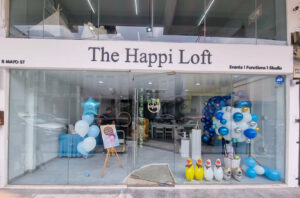
If you are looking for more ways to create memorable celebrations, The Happi Loft offers expert event planning services, perfect for baby 100 days celebration ideas and beyond. With a spacious 2,000 sq ft venue featuring floor-to-ceiling glass windows, we provide a stunning backdrop for every occasion.
At The Happi Loft, we take pride in bringing dream events to life. From birthdays to weddings and corporate functions, our versatile space and entertainment options allow for endless possibilities. Let us help you create happy, fun, and meaningful moments that will be cherished for years to come.
Contact us today to start planning your perfect celebration!
Frequently Asked Questions About Games For Kids’ Birthday Party
Does The Number Of Children At A Party Affect The Type Of Games To Choose?
Yes, the number of participants matters. Large groups work well with team-based games, while smaller groups may enjoy interactive or turn-based activities.
Are There Birthday Party Games For Kids That Encourage Teamwork?
Yes, games like treasure hunts, relay races, parachute games, and cooperative challenges promote teamwork and social interaction among children.
Can Birthday Party Games For Kids Be Adapted For Different Skill Levels?
Yes, many games can be modified based on age or ability. For example, obstacle courses can have easier paths for younger children and more complex challenges for older ones.
When Should I Introduce Games During A Birthday Party?
Games are best played after the guests arrive and settle in. Start with an icebreaker game, then introduce main activities before cake-cutting and gift-opening.
Should Parents Or Hosts Participate In Kids’ Birthday Party Games?
Yes, for younger children, parental involvement can help with game organisation and encouragement. Older kids may prefer playing independently.

San Htar is the SEO Specialist at The Happi Loft, where she manages SEO and content strategy for the brand’s online presence in Singapore. With several years of experience in digital marketing across Southeast Asia, she has worked across SEO, paid media, and content marketing for businesses in multiple industries. At The Happi Loft, she focuses on creating meaningful and search friendly content that helps parents and families discover engaging indoor playground experiences, enrichment activities, and family friendly spaces in Singapore. The Happi Loft is a growing family lifestyle and indoor playground brand known for providing safe, fun, and interactive experiences for children and parents.